Su 25 Jet - The Sukhoi Su-25 Grach (Russian: Грач (crook); NATO reporting name: Frogfoot) is a subsonic, single-seat, twin-engine aircraft manufactured in the Soviet Union by Sukhoi. It was designed to provide proximity to land forces. The first prototype made its maiden flight on 22 February 1975. After testing, the aircraft entered service in 1978 in Tbilisi, Soviet Republic of Georgia.
The first modifications include the Su-25UB two-seat trainer, the Su-25BM for towables and the Su-25K for export customers. Some aircraft were upgraded to the Su-25SM class in 2012. The Su-25T and Su-25TM (also known as the Su-39) were more advanced, but not mass-produced. The Su-25 and Su-34 are the only fixed-wing armored aircraft in production as of 2007.
Su 25 Jet
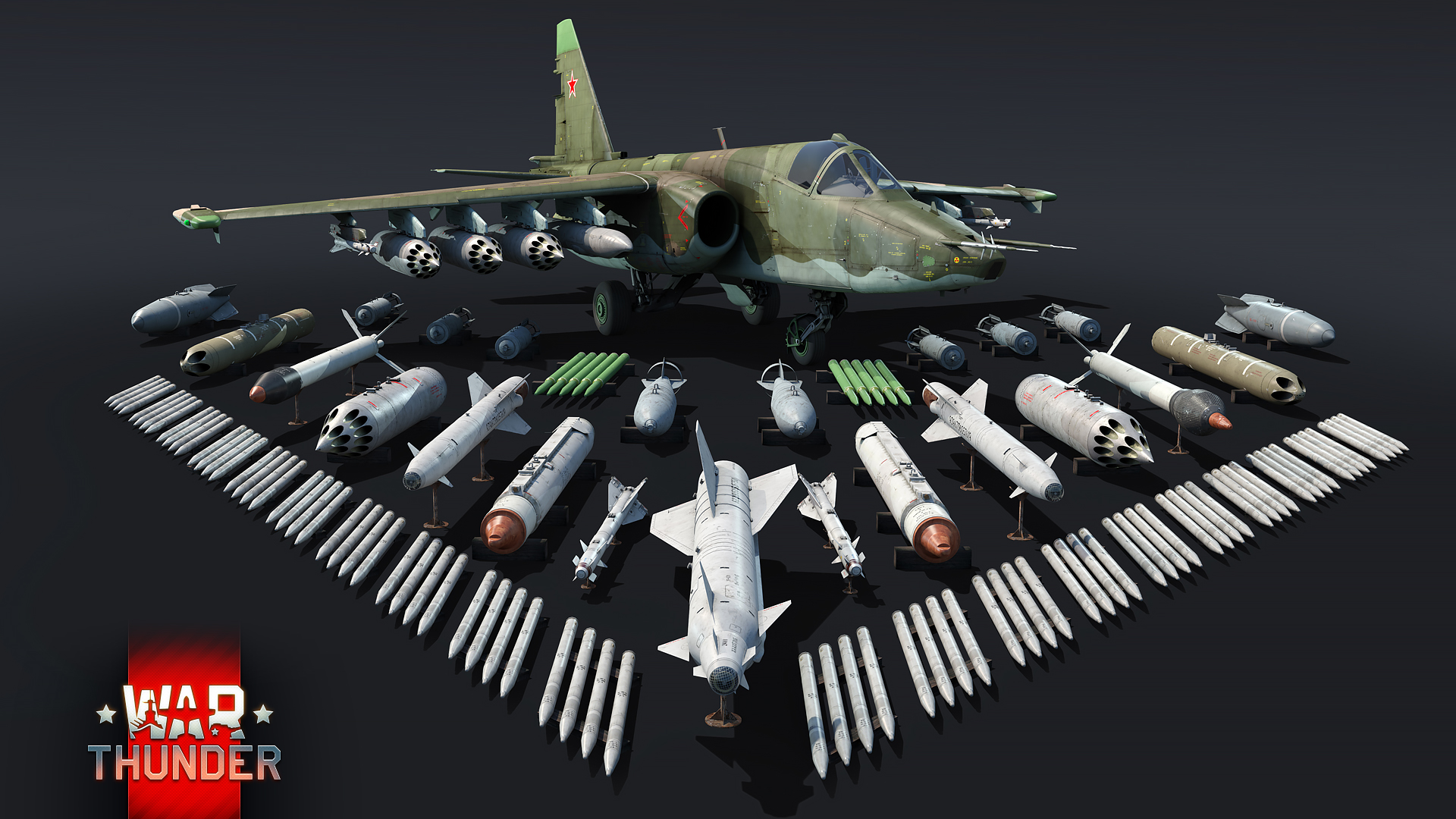
The Su-25s are in service with Russia, other NATO member states and export customers. Su-25 production began in 2017 in Russia
Su 25 Frogfoot In Scale
Since being in service for more than 41 years, the Su-25 has fought in many battles. The type played a major role in the war between the Soviet Union and Afghanistan, flying counter-insurgency campaigns against the Afghan Mujahideen. The Iraqi Air Force used it against Iran during the 1980–88 Iran–Iraq War. Several Iraqi examples were destroyed or flown to Iran during the 1991 Persian Gulf War. 25 against Albanian rebels in the 2001 Macedonian War and in 2008 both Georgia and Russia used the Su-25 in the Russo-Georgian War. African countries, including Ivory Coast, Chad and Sudan, have used Su-25s against local rebels and civil wars. In fact, the Su-25 has been involved in Russian operations in the Syrian conflict, the 2020 Nagorno-Karabakh conflict, and the 2022 Russian invasion of Ukraine.
In early 1968, the Soviet Ministry of Defense decided to develop a special armored shturmovik aircraft to provide close air support to Soviet forces. The idea to create a ground support aircraft came after analyzing the experience of fighter jets (shturmovaya) in the 1940s, 1950s and 1960s.
At that time (Su-7, Su-17, MiG-21 and MiG-23) Soviet bombers were either in service or under development.
They did not have advanced equipment to protect the pilot and critical equipment against ground and missile attacks, and the take-off speed kept the pilot in close contact with the target. With these issues in mind, Pavel Sukhoi and a group of senior experts from the Sukhoi Design Bureau began the design work in a relatively short period of time, with the support of key agencies of the Ministry of Aviation Industry and the Ministry of Defense. .
Su 25 Froschfuß
In March 1969, a competition was announced by the Soviet Air Force calling for a design for a new close combat aircraft. The participants in the competition were the Sukhoi design bureau and the Yakovlev, Ilyushin and Mikoyan design bureaus.
Sukhoi completed its "T-8" design in late 1968 and began work on the first two prototypes (T8-1 and T8-2) in January 1972. The T8-1, the first composite airframe, was completed on May 9, 1974. More reports date to November 1974. However, it did not make its first flight until February 22, 1975, after extensive test flights by Vladimir Ilyushin. The Su-25 outperformed its main rival in the Soviet air force competition, the Ilyushin Il-102, and the Ministry of Defense announced series production.
During the testing phase of the T8-1 and T8-2 prototypes, the head of the Sukhoi design bureau suggested that production of the Su-25 should begin at plant no. 31 in Tbilisi, Soviet Republic, instead it is also the main training center for MiG-21UM "Mongolia-B" trainers. After negotiations and the completion of all levels of government hearings, the Soviet Ministry of Aviation approved the production of the Su-25 in Tbilisi, allowing production to begin in 1978.

The late 1980s and early 1990s saw the emergence of various Su-25s, including modern versions, with special missions. The main designs available are the Su-25UB two-seat trainer, the Su-25BM for towing and the Su-25T for anti-tank. In addition, the Su-25KM prototype was developed by Georgia in cooperation with the Israeli company Elbit Systems in 2001, but so far this variant has not achieved much commercial success. Since 2007
Meet The Su 25 Frogfoot: Russia's Most Battle Hardened Aircraft
The Russian Air Force, which operates a large number of Su-25s, planned to upgrade the older aircraft to the Su-25SM, but lack of funds had delayed progress; by early 2007 the sev plane itself had been modified.
The Su-25 has an aerodynamic airframe with shoulder-mounted trapezoidal wings and a conventional tail and rudder. Most metals used in the construction of the airframe: 60% aluminum, 19% steel, 13.5% titanium, 2% magnesium and 5.5% other materials.
All versions of the Su-25 have steel wings, sweep incomparably, in large scale and are equipped with advanced equipment. The wing consists of two structural members attached to a central rotary box, which forms one part with the fuselage. An air brake is installed in a cover on top of each wing. Each wing has five arms, with attachment points attached to structural ribs and spars.
The panels are installed with a metal guide and swivel, attached to the hinges on the back. Trapezoidal ailerons are located near the wings.
Sukhoi Su 25
The Su-25's fuselage is an oval section and is a monolayer section, constructed of skin, arranged as a long support platform, beams and cables, and a structural assembly.
The first version of the Su-25 was equipped with two R-95Sh turbojets, in compartments on either side of the fuselage. The engine, assembly and surrounding fuselage are cooled by air supplied by an air cooler across the engine bays. The drainage system collects oil, fluid residues and fuel from the engine after flight or after a start failure. The gene control system allows each gene to be controlled individually.
An automatic cannon is located in a compartment adjacent to the cockpit and is mounted on a support beam attached to the cockpit floor and the aircraft structure. The nose is equipped with special double hinges for usability.

The pilot controls the aircraft with the left and right joysticks. The pilot sits in the seat of the Zvezda K-36 (similar to the Sukhoi Su-27) and has standard flight instructions. Behind the cockpit is a six-millimeter (0.24 in) long steel, mounted on the stern. The cockpit has a toilet-like shower cubicle made of welded titanium plates and transom ports. Ducts to control the ejection seat are mounted on the rear wall of the cockpit.
New Tool Su 25 From Zvezda 1:48
Canopy stands to the right where the pilot uses a ladder to descend. Once inside, the pilot sits in the cockpit, protected by a shower cubicle, creating a cramped cockpit. Visibility from the cockpit is limited, which is important for improved aircraft protection. The background is clearly visible and a periscope is placed on top of the mount for comparison.
A sliding ladder built into the left fuselage provides access to the cockpit as well as the cockpit.
The basic model of the Su-25 includes a number of critical flight systems. It doesn't have a TV guide, but it does include a dedicated nose-mounted laser rangefinder, which should provide accurate target detection.
DISS-7 doppler radar used for navigation; The Su-25 can fly at night, in atmospheric conditions and in flight training.
How Good Is Su 25 Ground Attack Aircraft That Is Currently In Action In Ukraine Russia War
The Su-25 is often equipped with radios for air-to-air communications, including the SO-69 identification-peace-or-enemy (IFF) transponder. The anti-aircraft system includes various functions, such as flares and chaff spreaders that can launch fires up to 250 degrees with dipoles. The radar beam is shielded by the SPO-15 radar warning system.
The new Su-25TM and Su-25SM models are equipped with a new class of aircraft and weapons, resulting in better survivability and combat capability.
The Air Force's first Su-25 wing is the 80th Attack Wing, established in February 1981 and based at Sitalcay Air Base in the Soviet Republic of Azerbaijan.
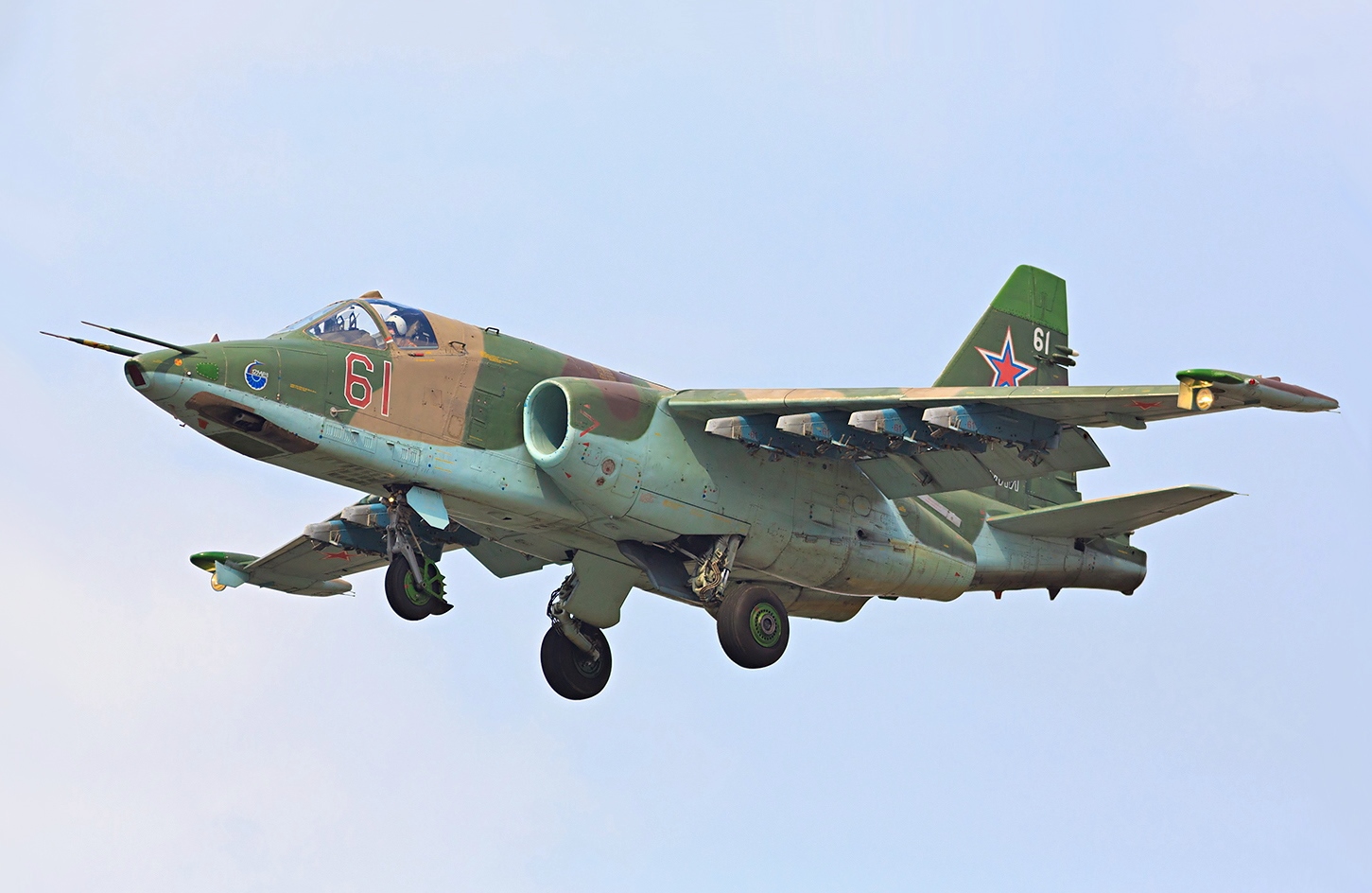
On 19 July 1981, the 200th Independent Attack Squadron redeployed to Shindand Airfield in western Afghanistan, becoming the first Su-25 squadron to deploy to that country. Its main mission was to carry out airstrikes on military bases and mountains controlled by Afghan insurgents.
Ukraine Received Four Su 25 Jet Aircraft From North Macedonia
Another Soviet Su-25 unit is the 368th Assault Aviation Regimt, established on 12 July 1984 in Zhovtneve, Ukraine.
During the war between the Soviet Union and Afghanistan, Su-25s fired 139 cruise missiles of all types at Mujahideen positions. On average, each aircraft flew 360 sorties per year, the most of any combat aircraft in Afghanistan. During the war, about 50 Su-25s were sent to airfields in Afghanistan and flew 60,000 missions. First deployed in 1981 and during the war in 1989, 21-23 aircraft were lost in combat operations,
0 Comments